What HVAC upgrades can make the biggest difference to household energy performance? In Ventura County, where cooling demand can rise sharply during warmer periods, an efficient heating and cooling system can influence comfort, operating costs, and indoor air quality. Homeowners considering HVAC Ventura County improvements can evaluate equipment efficiency, ductwork, controls, insulation, and maintenance together rather than treating each component as an isolated investment. A properly planned upgrade can help a property maintain more consistent temperatures while reducing unnecessary system operation.
Table of Contents
- Why Does HVAC Efficiency Matter So Much?
- Can Replacing an Older Air Conditioner Improve Energy Performance?
- How Does a Variable-Speed System Help?
- What Role Does a Smart Thermostat Play?
- Can Ductwork Upgrades Reduce Energy Waste?
- How Important Is Proper Insulation?
- Does Airflow Affect HVAC Energy Consumption?
- How Can Zoning Improve Comfort and Efficiency?
- Is Preventive Maintenance an Energy Upgrade?
- What HVAC Upgrade Should Be Considered First?
- How Does Equipment Sizing Influence Long-Term Results?
- Can Better Indoor Air Quality Support HVAC Performance?
- What Should Homeowners Consider Before Starting an Upgrade?
- How Can Ventura County Homeowners Build a Long-Term HVAC Strategy?
Why Does HVAC Efficiency Matter So Much?
Heating and cooling equipment can represent a significant portion of a property’s energy use, particularly when systems are older or poorly maintained. An inefficient unit may run longer to reach the selected thermostat setting, increasing electricity consumption while creating uneven comfort.
Efficiency is not determined by the equipment alone. The condition of the ductwork, thermostat, air filters, insulation, airflow, and installation quality all contribute to overall performance. A high-efficiency unit cannot deliver its full potential if conditioned air escapes through damaged ducts or the system is incorrectly sized.
For this reason, an upgrade assessment should consider the entire HVAC system. Looking at individual components can identify immediate problems, while a broader evaluation can reveal opportunities for longer-term improvement.
Can Replacing an Older Air Conditioner Improve Energy Performance?
Yes, replacing an aging air conditioner with a modern high-efficiency model can improve energy performance when the new system is correctly selected and installed. Older equipment may have lower efficiency ratings and can also lose performance because of worn components, restricted airflow, refrigerant issues, or years of accumulated maintenance problems.
Modern systems are designed with improved compressors, motors, controls, and heat-transfer technology. However, homeowners should avoid choosing equipment based solely on the largest capacity available. An oversized system may cool a property quickly but cycle frequently, which can affect humidity control and operating efficiency.
Professional load calculations can help determine an appropriate system size. The objective is to match equipment capacity with the property’s characteristics, including floor area, insulation, windows, orientation, occupancy, and local climate conditions.
How Does a Variable-Speed System Help?
Variable-speed technology allows HVAC equipment to adjust its operating output instead of relying exclusively on simple full-power operation. During periods when only moderate cooling is needed, the system can operate at a lower level for longer periods.
This approach can provide several practical benefits. More gradual operation may support steadier indoor temperatures and improved humidity management. It can also reduce the repeated starts and stops associated with conventional single-stage equipment.
For properties where comfort fluctuations are common, variable-speed technology may be particularly useful. The potential value depends on the home’s design, existing ductwork, equipment compatibility, and installation quality.
What Role Does a Smart Thermostat Play?
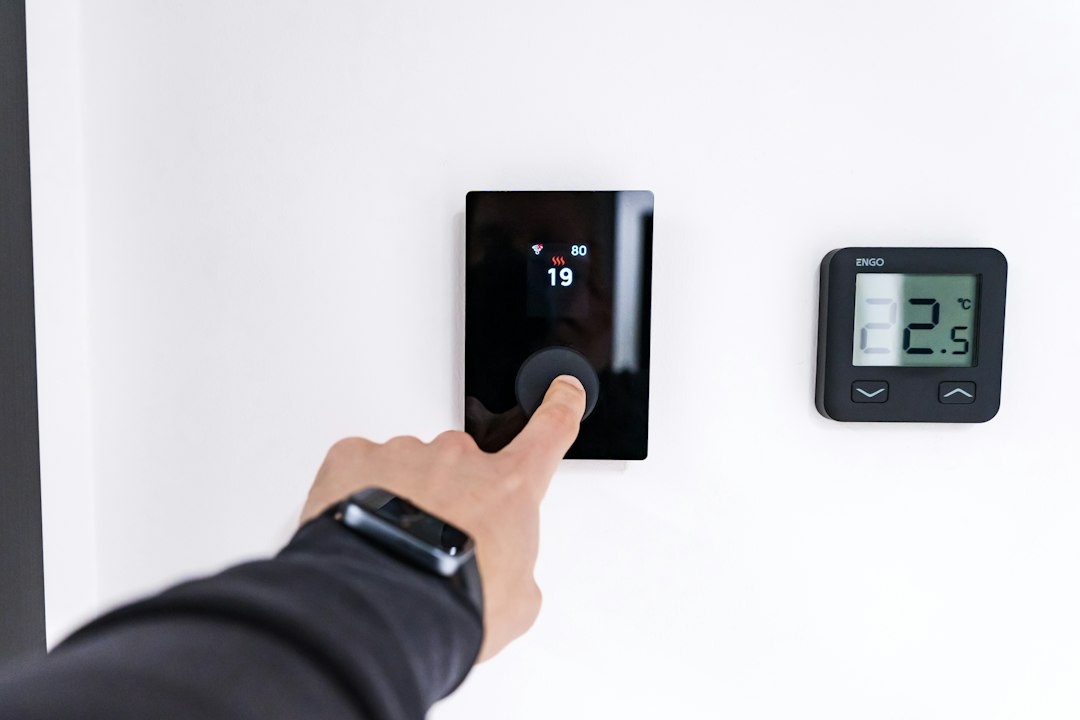
A smart thermostat can improve energy management by giving homeowners more control over when and how HVAC equipment operates. Programmable schedules can reduce unnecessary heating or cooling when rooms are unoccupied, while remote access allows temperature settings to be adjusted from a mobile device.
Some advanced thermostats can learn household patterns and provide information about system operation. Energy-use reports may also help homeowners identify periods of unusually high HVAC demand.
However, a smart thermostat is not a substitute for efficient equipment. Installing advanced controls on a system with serious mechanical or airflow problems may produce limited results. The thermostat works best when paired with a properly functioning HVAC system.
Can Ductwork Upgrades Reduce Energy Waste?
Ductwork is one of the most overlooked parts of residential HVAC efficiency. Leaks, loose connections, poor insulation, and crushed sections can allow conditioned air to escape before it reaches living spaces.
In a home with significant duct losses, upgrading the equipment without addressing the distribution system may leave some efficiency improvements unrealized. Sealing accessible connections and improving insulation where appropriate can help conditioned air reach its intended destination.
Duct balancing can also address rooms that receive too much or too little airflow. A professional assessment can identify restrictions and distribution problems that are difficult to detect through thermostat readings alone.
How Important Is Proper Insulation?
Insulation works alongside HVAC equipment by slowing the transfer of heat between the interior and exterior of a building. A well-insulated home generally places less demand on its heating and cooling system because indoor conditions are easier to maintain.
Attic insulation is especially relevant because heat can enter through the upper portion of a home during warm weather. Wall insulation, weatherization, and sealing around openings can also contribute to overall efficiency.
Before investing heavily in new HVAC equipment, homeowners may benefit from examining the building envelope. Reducing unwanted heat gain can allow the HVAC system to operate more efficiently and may improve comfort in rooms that previously experienced temperature swings.
Does Airflow Affect HVAC Energy Consumption?
Yes. Restricted airflow can make an HVAC system work harder than necessary. Dirty filters, blocked return vents, obstructed registers, undersized ducts, and dirty coils can all contribute to airflow problems.
A simple first step is maintaining clean filters according to the equipment manufacturer’s recommendations and household conditions. Homes with pets, construction activity, or higher dust levels may require more frequent attention.
Professional maintenance can go further by evaluating coils, electrical components, refrigerant conditions, blower performance, condensate drainage, and other system elements. Maintaining proper airflow supports both efficiency and equipment longevity.
How Can Zoning Improve Comfort and Efficiency?
HVAC zoning divides a property into separate temperature-control areas. Instead of conditioning the entire home uniformly, zoning can direct heating or cooling toward occupied spaces according to demand.
This can be useful in larger homes, properties with multiple floors, or buildings where rooms experience different levels of sunlight. For example, a west-facing room may gain more heat during afternoon hours than a shaded interior space.
Zoning does require appropriate equipment, controls, and ductwork design. It should therefore be evaluated as part of a complete HVAC plan rather than added without considering the existing system.
Is Preventive Maintenance an Energy Upgrade?
Preventive maintenance is not technically the same as replacing equipment, but it can support energy-efficient operation. HVAC systems gradually accumulate dust and experience normal mechanical wear. Without periodic inspections, small problems can develop into performance issues.
Maintenance may include checking filters, electrical connections, coils, airflow, thermostat operation, drainage, and other components. Early identification of developing problems can prevent unnecessary strain and help maintain expected system performance.
For homeowners planning a major HVAC upgrade, maintenance history can also provide useful information. Repeated repairs or declining performance may indicate that replacement deserves consideration.
What HVAC Upgrade Should Be Considered First?
There is no universal first upgrade for every property. The most appropriate improvement depends on the home’s current condition, system age, comfort concerns, and energy-use patterns.
If the equipment is relatively new but rooms remain unevenly cooled, ductwork and airflow may deserve attention. If the system is aging and requires frequent repairs, replacement may provide a more comprehensive solution. If equipment works properly but runs excessively because of scheduling habits, thermostat controls may offer a simpler improvement.
An energy-focused evaluation can help prioritize projects according to need rather than simply replacing the most visible component.
How Does Equipment Sizing Influence Long-Term Results?
Correct sizing is fundamental to HVAC performance. A system that is too small may struggle to maintain comfortable indoor temperatures during peak conditions. A system that is too large may cycle on and off more frequently than necessary.
Neither situation is ideal. Proper sizing considers the characteristics of the building rather than relying on a basic square-footage estimate.
A detailed assessment can account for insulation, windows, building orientation, ceiling height, occupancy, and other variables. This helps create a system that operates according to the property’s actual heating and cooling requirements.
Can Better Indoor Air Quality Support HVAC Performance?
Indoor air quality improvements and energy efficiency can overlap when the system is properly designed. High-quality filtration can help capture airborne particles, while adequate ventilation can support healthier indoor conditions.
However, filters should not be selected without considering system compatibility. A filter that creates excessive resistance can restrict airflow and increase system strain.
The right balance involves selecting filtration appropriate for the equipment and maintaining it regularly. Clean coils, ducts, and air-handling components can also support reliable operation.
What Should Homeowners Consider Before Starting an Upgrade?
Homeowners should begin by identifying the primary reason for upgrading. High utility consumption, inconsistent temperatures, frequent repairs, excessive runtime, noise, or indoor air concerns can each point toward different solutions.
The age and condition of existing equipment should also be documented. Reviewing service history can help determine whether continued repairs remain practical.
It is equally important to consider installation quality. Even efficient equipment may fail to deliver expected performance when installed incorrectly. A complete upgrade should therefore include equipment selection, sizing, ductwork evaluation, controls, airflow, and commissioning.
How Can Ventura County Homeowners Build a Long-Term HVAC Strategy?
A long-term approach focuses on reducing unnecessary energy demand while maintaining dependable comfort. Instead of waiting for equipment failure, homeowners can monitor system performance and address developing issues before they become major problems.
A practical strategy may involve regular maintenance, improved insulation, duct sealing, efficient controls, and eventual replacement with appropriately sized equipment. Each improvement can contribute to the overall performance of the property.
The strongest results generally come from treating the home as a complete system. HVAC equipment, ductwork, insulation, thermostat controls, and building conditions interact continuously. Evaluating those elements together can help homeowners make informed upgrade decisions and create a more comfortable indoor environment.
For Ventura County properties, climate-aware HVAC planning can be particularly valuable. A system designed around actual household needs, building characteristics, and seasonal conditions can support dependable comfort without unnecessary energy use. With careful assessment and professional installation, HVAC upgrades can become a practical part of a broader home-efficiency strategy.
At a Glance
- In Ventura County, efficient heating and cooling systems impact comfort, operating costs, and indoor air quality significantly.
- An upgrade assessment for HVAC systems should evaluate equipment efficiency, ductwork, controls, insulation, and maintenance as interconnected components.
- Replacing an older air conditioner with a modern high-efficiency model can lead to improved energy performance if appropriately sized and installed.
- Variable-speed technology in HVAC systems allows for adjusted operating outputs, benefiting indoor temperature consistency and humidity management.
- Ductwork issues, including leaks and poor insulation, can lead to energy waste and should be addressed alongside HVAC equipment upgrades.
- Proper insulation is essential for HVAC efficiency, as it reduces heat transfer between indoors and outdoors, allowing for easier temperature maintenance.